
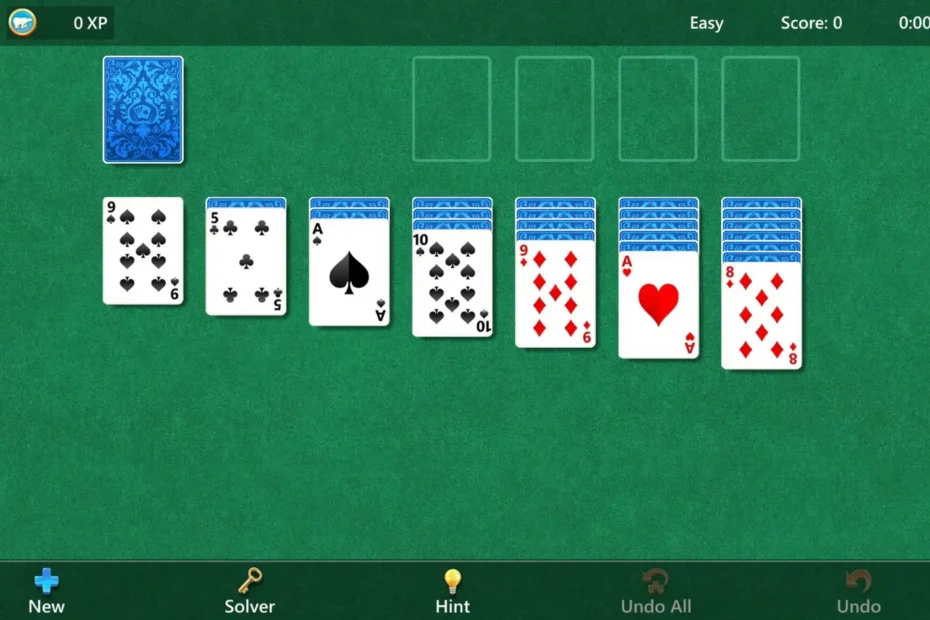
You don’t really think about deep strategy when considering a game of solitaire, but the truth is that one move can make or break your game. But with so many moves available at a time, you don’t always know which is the right one.
That is the same problem a good puzzle walkthrough tries to solve: explain the reasoning behind the next step without playing the entire game for the reader. Players can test that approach on PlaySolitaire, where a familiar layout makes it easy to compare one decision with another.
This is useful because you don’t get a bland list of things to do – one that usually makes no sense, but a way of reading the board. Each move should protect your flexibility, be useful, reveal new cards and/or open up the potential for extra useful moves.
The first move is more important than it seems
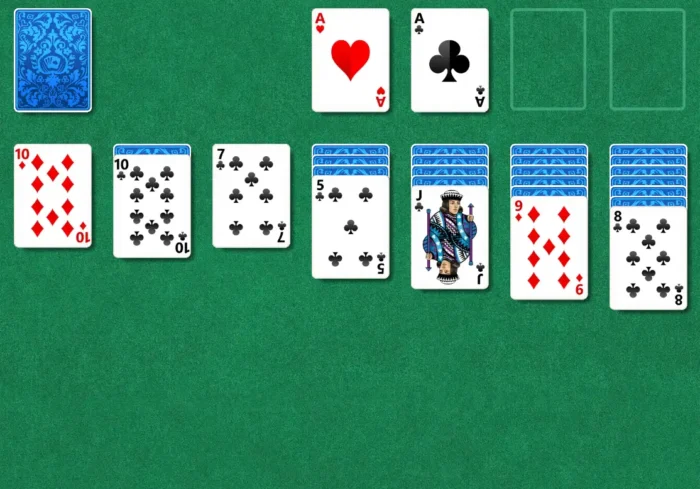
Usually, at the start of a deal, you have plenty of moves available and each seems like the right one – or at least one that’s harmless. Moving a red seven onto a black eight might be possible, but that doesn’t mean it’s useful.
The better question is what the move reveals and that is what you should be aiming for.
Turning over a hidden tableau card gives new information. Opening a column creates space that may support a king and a long sequence. Moving a card to a foundation pile can simplify the board, but it can also remove a card that would have helped rearrange the tableau.
A strong opening move usually does more than tidy the screen. It changes what the player knows and expands what the player can do next – this is the only correct approach.
Good play keeps options open
Just like any puzzle game out there, Solitaire rewards the habit of strategizing a bit and considering why one route leaves more possibilities than another.
Suppose two black eights can receive the same red seven. One eight sits above a face down card, while the other is already part of an exposed sequence. Placing the seven on the first stack may block a reveal. Placing it on the second may preserve the path to new information.
This is why experienced players usually seem to be patient and even slow. They are simply considering their options, protecting their future moves, and are actually planning for them. An empty column, an available opposite color and a low card held back from the foundation will all function as strategic resources.
A blocked deal is a debugging problem
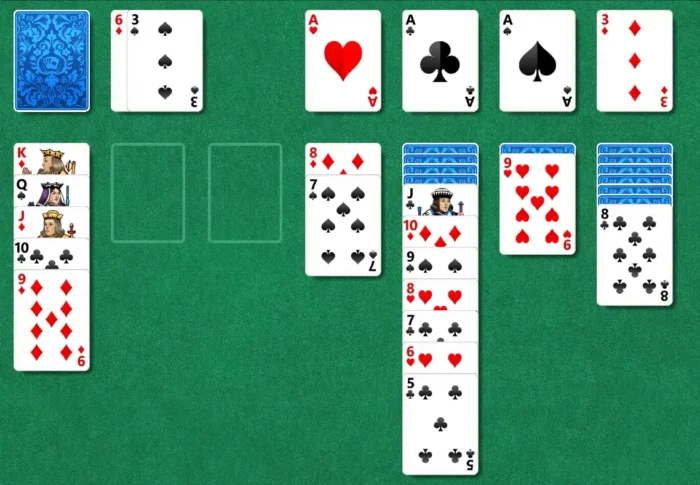
When a game stalls, the useful response is not simply to search for another move, but to identify the point where the board lost flexibility.
Was a card moved to the foundation too early? Did a king occupy the only open column without creating access to anything beneath it? Was a useful sequence built on the wrong color? These questions treat the deal like a system that can be inspected.
That mindset is common in puzzle guides. A good guide does not only say, “move this piece.” It shows which constraint caused the problem and which earlier choice created it. Solitaire becomes more satisfying when players review a failed deal in the same way.
Undo can teach rather than erase
An undo button is sometimes treated as a way to avoid consequences, but it can also be a learning tool. If a player reverses one move and tries the alternative, the difference becomes visible immediately.
The important part is to compare outcomes. Did the alternative expose a card sooner? Did it keep an empty column free? Did it prevent two useful cards from becoming trapped in the same stack?
Used this way, undo turns one deal into a small experiment. The player is not chasing a perfect record. They are learning how the structure reacts.
A useful walkthrough explains the principle
A weak walkthrough gives a sequence of clicks that solves one exact position. A strong walkthrough teaches a rule that can travel to the next puzzle.
For solitaire, those principles are simple enough to remember:
- Reveal hidden cards when the move does not destroy flexibility.
- Treat empty columns as scarce space, not as storage.
- Move cards to the foundation when doing so will not remove a needed bridge from the tableau.
- Compare legal moves by the options they create, not by how much motion they produce.
These ideas do not guarantee that every deal can be completed. They do make the player’s reasoning clearer, which is the real value of strategy.
The next move should earn its place
Solitaire is often described as a casual game, but casual does not mean random or easy. The board rewards the same skills that make puzzle walkthroughs useful: observation, explanation and the ability to trace a problem back to an earlier choice.
The next move matters because it changes the shape of every move after it. Once players begin asking what a move reveals, preserves or blocks, the game stops feeling like card sorting and starts feeling like a compact strategy puzzle.
And we do have options, like Dreamland Solitaire: Dragon’s Fury I wrote about in a previous article.